
수직각형 로터
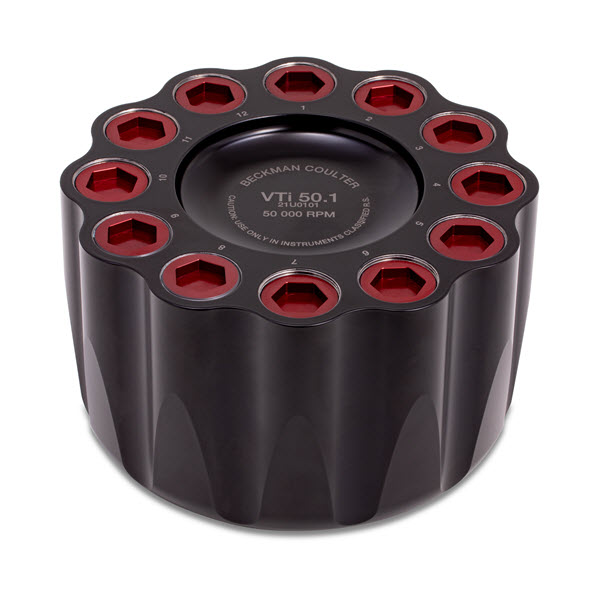
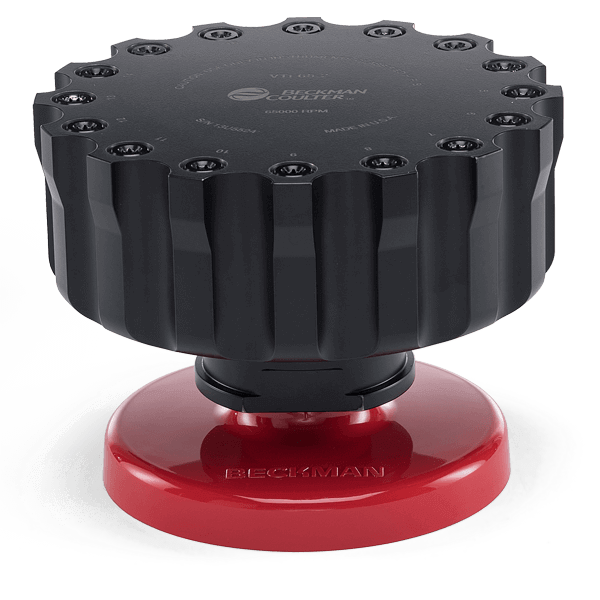
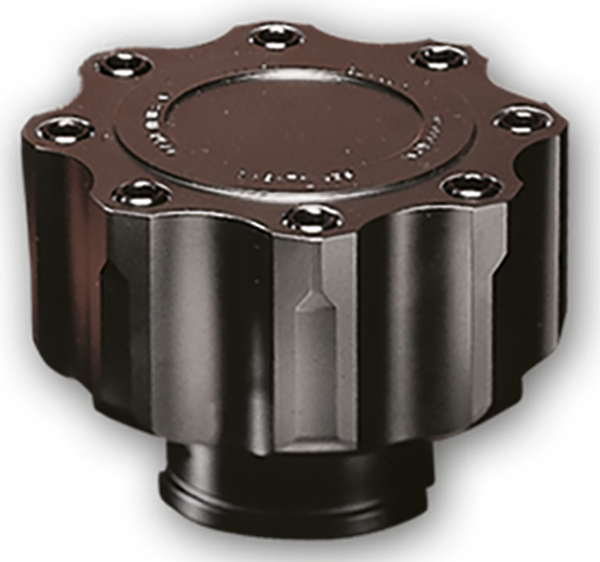
수직각형 로터(Vertical angle rotor)는 모든 로터 유형 중 최단 이동 거리, 가장 빠른 실행 시간 및 최고 해상도를 특징으로 합니다.
수직각형 로터는 운행 중 튜브는 수직 형태입니다. 이 로터의 짧은 이동 거리 및 낮은 k 계수는 미립자가 펠릿으로 이동하는 거리가 짧아 작업의 실행 시간이 단축된다는 것을 의미합니다.
완벽하게 수직 형태인 튜브의 구심력이 튜브의 전체 외벽을 따라 펠릿을 분산하기 때문에 펠렛화 작업에 가장 적합한 로터는 아닙니다.
수직각형 로터의 용도는 다음과 같습니다.
- 등밀도 분리 – 특히 Caesium chloride(CsCl)의 DNA 분리
- 바이러스 입자와 같은 밀도기울기에 따른 원심분리
밀도구배 원심분리:
- 튜브 바닥에서부터 튜브의 상층부까지 밀도가 증가
- "부드러운" 쿠션 인터페이스에서 펠릿화된 샘플을 분리하는 데 이상적

FAQ on Vertical Angle Rotors
What applications are vertical rotors commonly used for?
Vertical rotors are commonly used for isopycnic centrifugation, density gradient separations, plasmid DNA purification, viral particle isolation, lipoprotein analysis and other ultracentrifugation workflows that require rapid equilibrium separations.
What is a vertical rotor?
A vertical rotor is an ultracentrifuge rotor that maintains sample tubes parallel to the axis of rotation during centrifugation. This geometry creates the shortest sedimentation path of any rotor design and helps accelerate density gradient separations.
Why are vertical rotors used for isopycnic centrifugation?
Vertical rotors provide a very short path length through the density gradient. This allows particles to migrate quickly to their equilibrium density, helping reduce run times while maintaining high separation resolution.
What is the k-factor of a centrifuge rotor?
The k-factor is a measure of a rotor's sedimentation efficiency. Lower k-factor values generally indicate faster particle sedimentation and shorter run times. When comparing ultracentrifuge rotors, the k-factor can help determine which rotor may provide the most efficient separation for a specific application.
Are vertical rotors suitable for pelleting applications?
Vertical rotors are generally not the preferred choice for pelleting. Because the tubes remain vertical during centrifugation, pellets may spread along the outer wall of the tube rather than forming a compact pellet at the bottom. Fixed-angle or swinging-bucket rotors are typically better suited for pelleting workflows.
What is the difference between a vertical rotor and a fixed-angle rotor?
Vertical rotors are primarily designed for density gradient and isopycnic separations, where particles move through a gradient to reach their equilibrium density. Fixed-angle rotors are typically optimized for pelleting applications, where particles sediment toward the tube wall and form a pellet. The choice depends on whether the goal is particle pelleting or high-resolution gradient separation.
When should I use a near vertical rotor instead of a vertical rotor?
Use a near vertical rotor instead of a vertical rotor if particles in your solution will pellet out of solution and risk contaminating your gradient bands. In a near vertical rotor, those containments will move to the bottom of the tube instead of remain on the side wall, as they do in a vertical rotor.
