
준 수직각형 로터
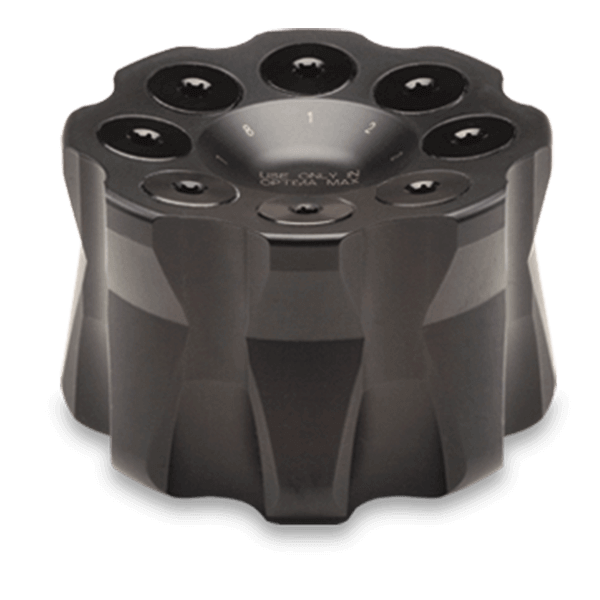
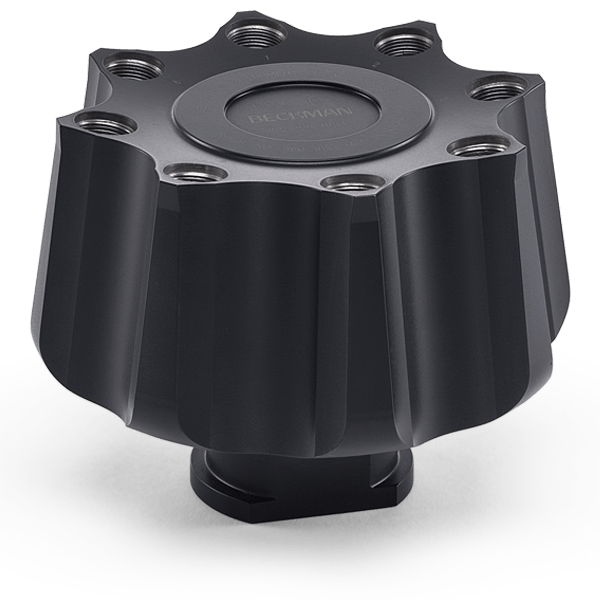
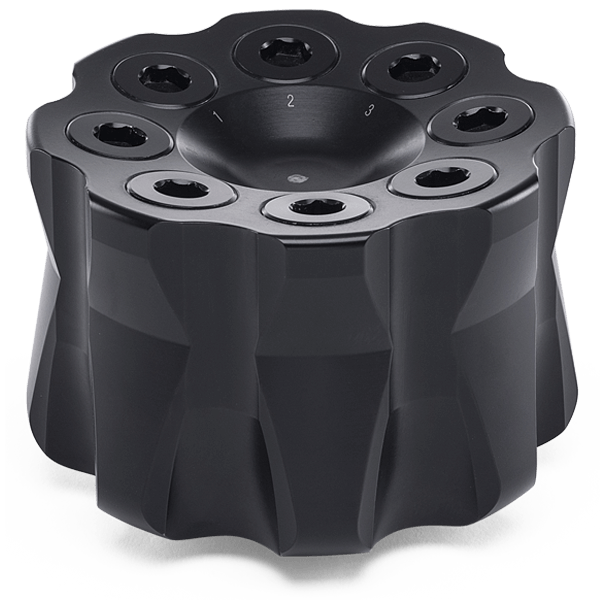
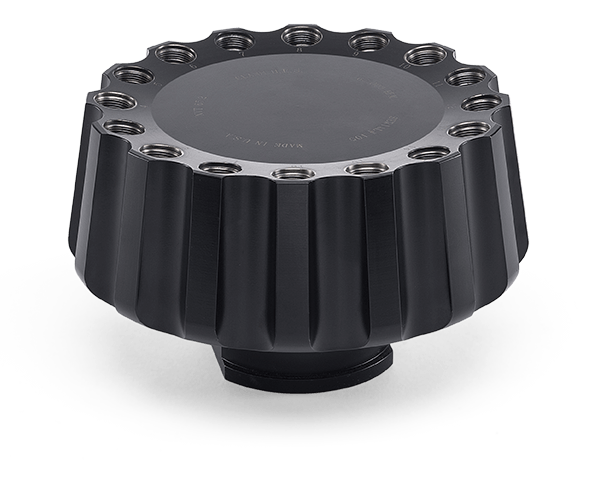
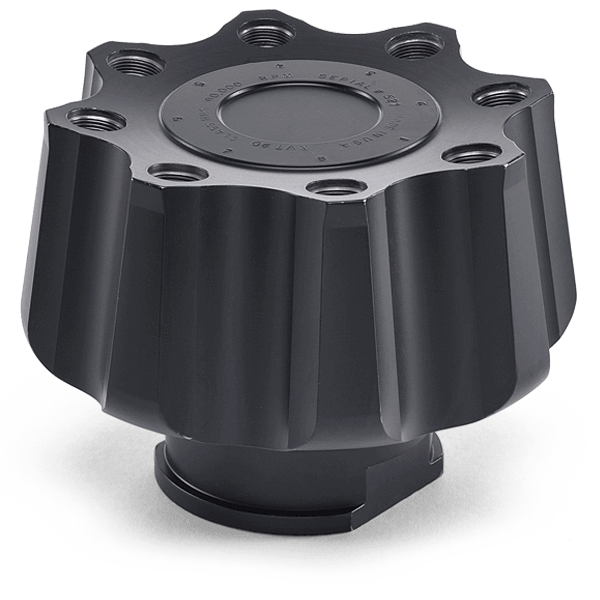
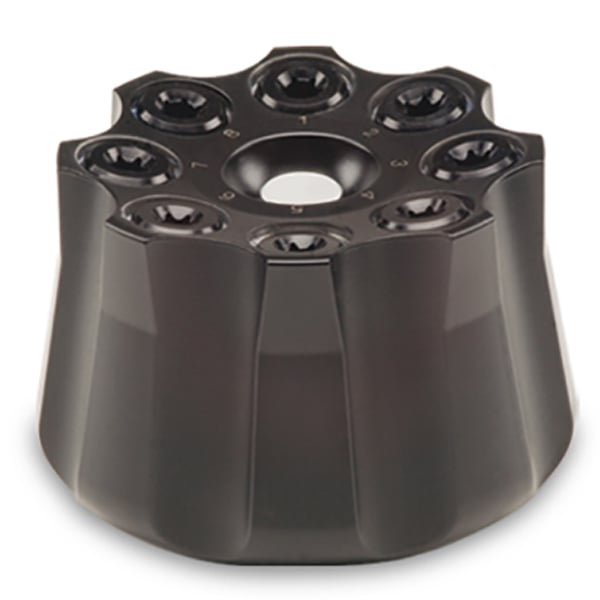
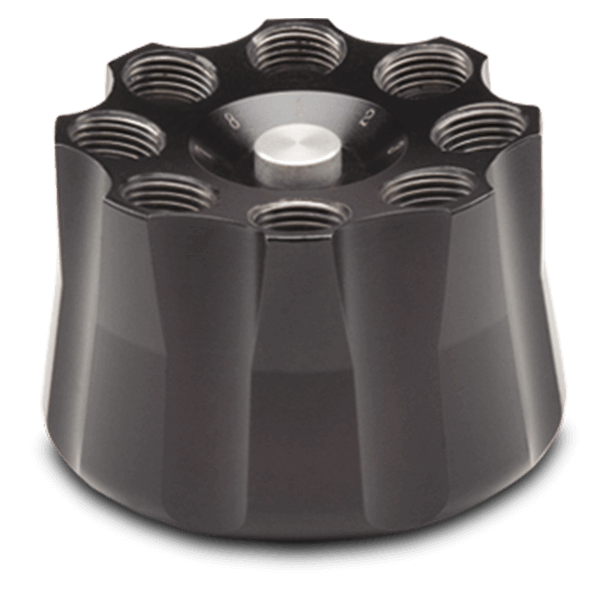
준 수직각형 로터(Near-vertical rotor)는 짧은 경로 길이, 빠른 실행 시간 및 탁월한 해상도를 특징으로 합니다.
준 수직각형로터에서 튜브는 수직에서 7.5°– 9° 정도 약간 기울어져 있습니다. 이러한 특징 때문에 샘플의 이동경로가 짧아집니다. 이동경로가 짧을수록 분리 시간도 짧아집니다.
약간의 각도는 펠릿이 튜브의 밑 면쪽으로 쌓이게 하여 실행이 멈추면 용액이 펠릿과 접촉되지 않습니다.
FAQ on Near-Vertical Rotors
What is the difference between a near-vertical rotor and a fixed-angle rotor?
A fixed-angle rotor is typically optimized for rapid pelleting applications, while a near-vertical rotor is often chosen for density gradient and isopycnic centrifugation workflows. Near-vertical rotors provide a shorter path length within the gradient, which can help reduce separation times for equilibrium and gradient-based applications.
Why are near-vertical rotors used for density gradient centrifugation?
Near-vertical rotors provide a shorter sedimentation path than many other rotor designs. This can reduce run times and support efficient density gradient separations while maintaining resolution between particles with different buoyant densities.
Why choose a near-vertical rotor for DNA purification?
Near-vertical rotors are commonly used in density gradient-based nucleic acid separation workflows because they can support efficient migration of DNA molecules through the gradient while reducing run times compared with some traditional rotor configurations.
What is a near-vertical rotor?
A near-vertical rotor is an ultracentrifuge rotor that holds sample tubes at a shallow angle between vertical and fixed-angle orientations. This geometry creates a shorter sedimentation path, helping reduce centrifugation times while maintaining high separation efficiency.
What applications are near-vertical rotors commonly used for?
Near-vertical rotors are frequently used for density gradient centrifugation, isopycnic separations, DNA purification, viral particle isolation, lipoprotein analysis, and other high-resolution ultracentrifugation workflows.
What is isopycnic centrifugation?
Isopycnic centrifugation is a density gradient separation technique in which particles migrate until they reach a position where their density matches the density of the surrounding gradient medium. Near-vertical rotors are commonly used for these applications because they can support efficient equilibrium separations.
